DNG at VINCI / 中国 杭州市にて開催されるVINCI2026にて研究発表を行います
2026. 11. 02
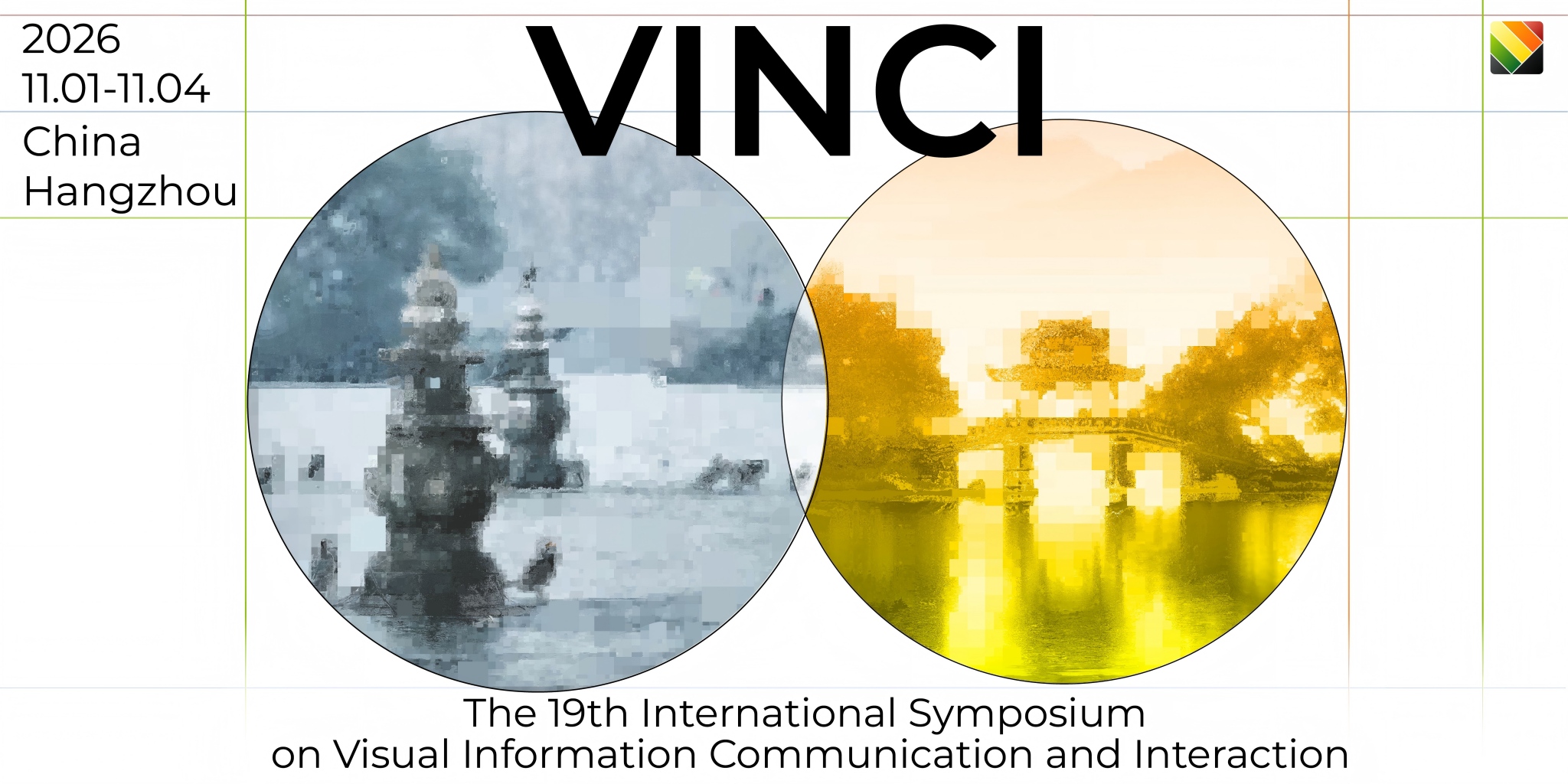
We will present our work at VINCI, in Hangzhou, China !
デジタルネイチャー研究室は,2026年11月1日から4日にかけて中国 杭州市で開催される視覚情報通信とインタラクションに関する国際シンポジウム The 19th International Symposium on Visual Information Communication and Interaction(VINCI2026)にて,2件のプロジェクトの研究発表を行います。
[Paper]
- What the Listener Keeps: An Autoethnography Comparing a Documenter’s Memory, AI-Generated Imaginings, and Photographs of Others’ Cherished Objects
- Practical Application of a Spatial Reality Display for 3D Digital Archives — A Case Study in a Football Museum
 VINCI2026:https://vinci-symp.org/index.html
 November 1–4, 2026
 at Hangzhou Chengbei Wenlan Hotel
発表プロジェクト
[Cultural Computing] What the Listener Keeps: An Autoethnography Comparing a Documenter’s Memory, AI-Generated Imaginings, and Photographs of Others’ Cherished Objects
Cultural records of cherished objects are mostly produced by people who were there: curators, field researchers, family members. These documenters are neither the owners of the memories they record nor strangers to them: they saw the object, heard its owner speak, and produced a record that outlives the encounter. Yet what their own memory adds to and subtracts from the record has not been examined. We investigate this position from the inside. The first author interviewed six private collectors in Tohoku, Japan, about objects they keep, then audited their own memory through a three-layer comparison: memory externalized in writing before any image was seen; renderings by text-to-image models prompted only with the narrator’s transcribed words; and the photographic record, or an empty frame where its publication was withheld. The comparisons were bound into hand-sewn, extra-illustrated booklets and exhibited with a station at which eleven visitors generated and inserted their own imaginings. In our cases, narrated procedure traveled well while material time did not; unwitnessed imagination, human and machine alike, tended to default to the present tense; and, unexpectedly, the machine’s wrong images worked as an elicitation device, prompting the witness to put into words what no earlier record had captured. We offer these observations as exploratory patterns to be tested across further witnesses, objects, and models, not as established properties. We contribute the secondary
witness as a methodological position for cultural computing, the three-layer comparison as a way to audit archives while their witnesses are alive, and a case-grounded account of what survives in which medium of record.
大切にされてきた品々に関する文化的記録は、その場に立ち会った人々――学芸員、フィールド調査研究者、あるいは家族など――によって作成されることが多い。こうした記録者は、記録する記憶の「所有者」ではないが、かといって全くの「他人」というわけでもない。彼らはその品を目にし、持ち主の語りを聞き、その出会いよりも長く残る記録を作り出したのである。しかし、記録者自身の記憶が、その記録に対して何を付け加え、あるいは何を削ぎ落としているのかについては、これまで十分に検討されてこなかった。本研究では、この立ち位置を「内側」から探究する。筆頭著者は、日本の東北地方に住む6名の個人収集家に対し、自身が所有する品々についてインタビューを行った。そして、以下の3つの層を比較することで、記録者自身の記憶を検証した。すなわち、画像を見る前に書き留められた記憶、語り手の言葉のみをプロンプトとして生成された画像(テキストから画像を生成するモデルによるもの)、そして写真記録(あるいは、公開が見送られた場合に生じる「空のフレーム」)である。これらの比較結果は、手縫いで綴じられ、図版を添えた小冊子にまとめられた。展示会場には、来場者が自身の想像を膨らませて記録を追加できるコーナーも設けられ、11名の来場者が参加した。調査の結果、語られた「手順」はうまく伝達される一方、「物質的な時間」はそうではないことが明らかになった。また、人間であれ機械であれ、直接目撃していない想像は、どうしても「現在形」に偏る傾向がある。興味深いことに、機械が生成した「誤った画像」が、語り手から新たな言葉を引き出す触媒として機能した。それまでどの記録にも捉えられていなかった事柄が、この画像を通じて語り手によって言語化されたのである。本稿で提示する知見は、確定した性質としてではなく、今後、他の証言者や対象物、モデルを用いて検証されるべき「探索的なパターン」として提案するものである。我々は、「文化的コンピューティング」における方法論的な立ち位置として「二次的な証言者」という概念を提示し、証言者が存命のうちにアーカイブを検証する手法として「3層比較」を提案する。さらに、どのような記録媒体に何が残るのかについて、具体的な事例に基づいた考察を行う。
Authors:Chinatsu Ozawa, Yoichi Ochiai, Masaki Takeda.
Project Page: in preparation
Publication Page:in preparation
C2 Cultural Reconstruction and Creation
Date: Monday, 2 November, 2026
Time: 16:10–18:00
ROOM: Wen Jin Ballroom B
Program:https://vinci-symp.org/schedule.html
[Art Paper] Practical Application of a Spatial Reality Display for 3D Digital Archives — A Case Study in a Football Museum
Museums often hold far more objects than they can display, leaving much of their collections inaccessible to visitors. We refer to this imbalance between collection size and exhibition capacity as the closed-stack dilemma. Although 3D digital archives can improve access, they are often separated from physical exhibitions.
We present a case study conducted during the relocation of the JFA Museum to the JFA Football Culture Hub “blue-ing!”, where reduced exhibition space limited the number of physical objects on display. We developed a hybrid exhibition combining physical showcases with a Spatial Reality Display (SRD) and evaluated it with exhibition professionals and general visitors.
Physical artifacts remained preferable for their authenticity, material qualities, and sense of scale. The SRD nevertheless enabled headset-free, interactive access to stored objects within the exhibition. Our findings show how an in-gallery 3D digital archive can address the closed-stack dilemma by bringing otherwise inaccessible collection objects into the exhibition context while preserving the central role of original artifacts.
博物館は、展示可能な数よりもはるかに多くの収蔵品を抱えていることが多く、その結果、収蔵品の大部分は来館者が目にすることのできない状態にあります。私たちは、収蔵品の規模と展示容量との間にあるこのような不均衡を、「クローズド・スタック(非公開収蔵)・ジレンマ」と呼んでいます。3Dデジタルアーカイブは収蔵品へのアクセスを改善し得るものですが、多くの場合、物理的な展示とは切り離された形で存在しています。
本稿では、JFAミュージアムが「JFAサッカー文化創造拠点『blue-ing!』」へ移転した際の事例を紹介します。この移転では、展示スペースが縮小されたことで、物理的な展示品を並べるためのスペースが制限されました。そこで私たちは、物理的なショーケースと「空間再現ディスプレイ(Spatial Reality Display:SRD)」を組み合わせたハイブリッド型の展示を開発し、展示の専門家および一般来館者を対象に評価を行いました。
評価の結果、本物の資料は、その真正性、素材の質感、そしてスケール感の面から、依然として高く評価されることが分かりました。一方でSRDを用いることで、ヘッドセットを装着することなく、収蔵品に対してインタラクティブにアクセスすることが可能となりました。本研究の知見は、展示空間内に3Dデジタルアーカイブを導入することが、いかにして「クローズド・スタック・ジレンマ」を解消し得るかを示しています。すなわち、本来は目に触れることのできない収蔵品を展示の文脈に取り込みつつ、同時に、実物資料が持つ中心的な役割を維持することができるのです。。
Authors:Takahito Murakami, Maya Torii, Jingjing Li, Yoichi Ochiai.
Project Page:in preparation
Publication Page:in preparation
A2 Heritage and Memory
Date: Tuesday, 3 November, 2026
Time: 10:40–12:00
ROOM: Wen Jin Ballroom B
Program:https://vinci-symp.org/schedule.html
研究室概要
名 称 : デジタルネイチャー研究室
指導教員 : 落合 陽一教授,伏見龍樹助教,李晶晶助教
所 在 地 : 茨城県つくば市春日1-2 筑波大学
研究内容 : 波動工学,デジタルファブリケーション,人工知能技術を用いた空間研究開発
URL: https://digitalnature.slis.tsukuba.ac.jp/
代表略歴
落合陽一 Yoichi Ochiai
筑波大学図書館情報メディア系教授、東京大学准教授。1987生,2015年東京大学学際情報学府博士課程修了(学際情報学府初の短縮終了),博士(学際情報学).日本学術振興会特別研究員DC1,米国Microsoft ResearchでのResearch Internなどを経て,2015年より筑波大学図書館情報メディア系 デジタルネイチャー研究室主宰.2015年,Pixie Dust Technologies.incを起業しCEOとして勤務.2017年から2019年まで筑波大学学長補佐,2017年から大阪芸術大学客員教授,2020年デジタルハリウッド大学特任教授,金沢美術工芸大学客員教授,2021年4月から京都市立芸術大学客員教授を兼務.2017年12月より,ピクシーダストテクノロジーズ株式会社による筑波大学デジタルネイチャー推進戦略研究基盤代表及び准教授を兼務.2020年6月デジタルネイチャー開発研究センター・センター長就任.専門はヒューマンコンピュータインタラクション・バーチャルリアリティ・人工知能領域の学際的展開,特に音響・レーザーホログラムの計算・応用領域に強い興味を持つ.
本件に関するお問い合わせ先
名称 : 筑波大学デジタルネイチャー研究室
Email : contact<-at->digitalnature.slis.tsukuba.ac.jp <-at->を@に置き換えてください
New
-
DNG at VINCI / 中国 杭州市にて開催されるVINCI2026にて研究発表を行います
26. 11. 02
-
DNG at ASSETS / ポルトガル ポルトにて開催されるASSETS 2026にて研究発表を行います
26. 10. 13
-
DNG at ICMI / イタリア ナポリにて開催されるICMI 2026にて研究発表を行います
26. 10. 05
-
Talk|日本武道学会第59回大会に関連する2つの企画にて,MR(複合現実)を用いた剣道に関する講演を行います。
26. 09. 04
-
DNG in VRSJ / 富山県立大学にて開催される第31回日本バーチャルリアリティ学会大会にて研究発表を行います
26. 09. 04