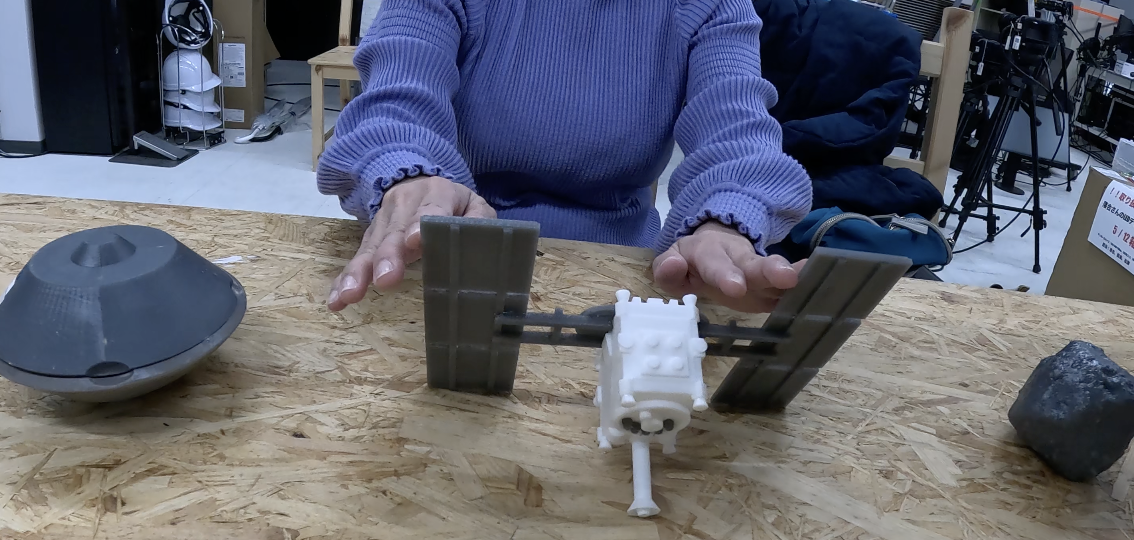
科学館や博物館で扱われる科学的な内容には、形状や位置関係、時間的な変化など、言葉だけでは理解することが難しい情報が多く含まれています。視覚障害者にとって、触覚模型はこうした情報を理解するための重要な手段ですが、あらかじめ決められた音声説明だけでは、触っている場所や一人ひとりの疑問に応じた柔軟な支援が困難です。
本研究では、複数の触覚模型を触りながら、音声による説明を聞いたり、自由に質問したりできる「Touch & Talk」という対話型の学習方法を検討しました。触察を支援する専門家へのインタビューと、視覚障害者を対象とした調査を通じて、模型に触れるタイミングに合わせた説明や、利用者の疑問に応じた対話が、複雑な科学的内容の理解と好奇心をどのように支えられるかを明らかにしました。
Scientific topics presented in museums and science centers often involve shapes, spatial relationships, and changes over time that are difficult to understand through verbal explanations alone. Tactile models provide an important way for blind and low-vision people to access such information. However, prerecorded explanations and predefined interaction flows cannot always respond flexibly to what a person is touching or what they want to know.
In this project, we investigated an interactive learning approach called “Touch & Talk,” which allows people to explore multiple tactile models while listening to explanations and asking questions through spoken dialogue. Through interviews with tactile-guidance experts and a study with blind and low-vision participants, we examined how explanations synchronized with tactile exploration and dialogue adapted to individual questions can support the understanding of complex scientific concepts and encourage curiosity.