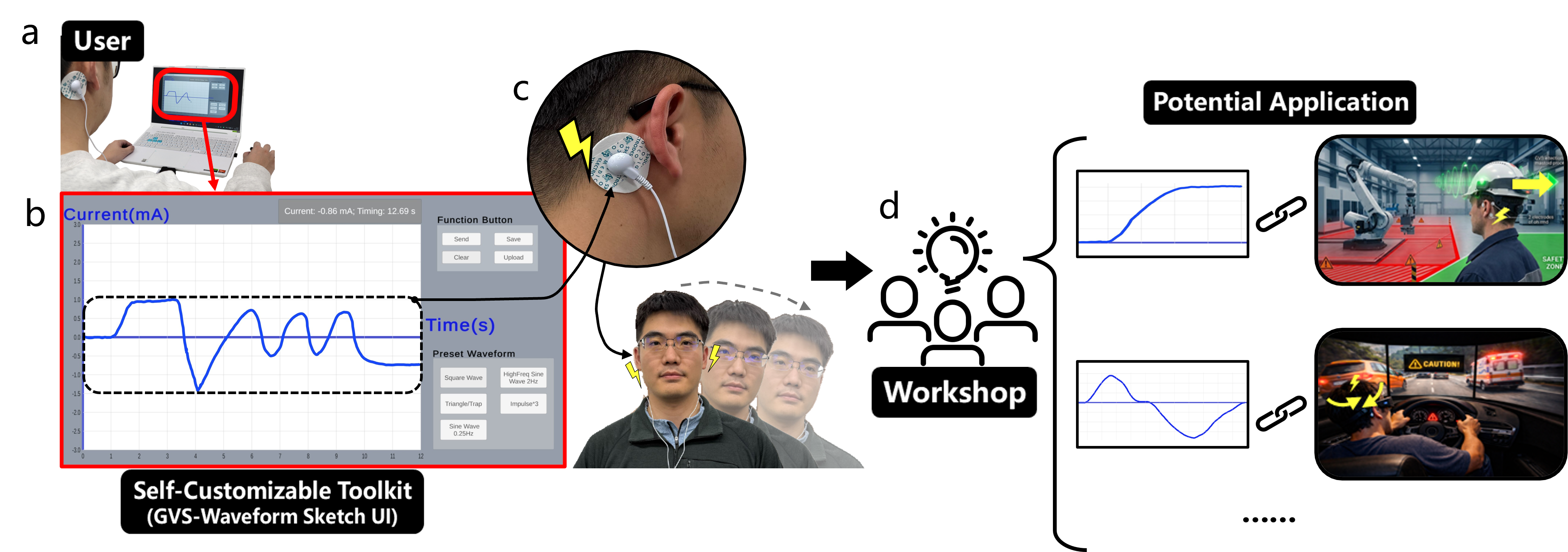
As Galvanic Vestibular Stimulation (GVS) evolves toward miniaturization, its potential for daily application remains underexplored beyond medical and sports domains. This study addresses this gap by employing a user-centric co-design approach to investigate how lay users envision lightweight wearable GVS in everyday contexts.
Through two workshops involving nine participants, we collected user-generated concepts and feedback following embodied GVS experiences. The research process integrated daily activity mapping, real-time stimulation trials, scenario ideation, and quantitative evaluation.
Results indicate that users view GVS not as a background technology for high-frequency daily routines, but as a task-oriented tool for specific contexts such as training, safety alerting, or immersive entertainment. While entertainment scenarios emerged as potential “transitional entry points” due to higher tolerance for novelty, somatic discomfort significantly limited acceptance for continuous, long-term usage. Additionally, due to the complexity of the sensation, user concepts remained largely preliminary.
This study elucidates the opportunities and limitations of wearable GVS from a user perspective. The findings underscore the critical importance of understanding users’ somatic boundaries and cognitive processes when designing intense body-based interfaces for daily applications.