[Abstruct]
Darkroom work is normally done under the dim red glow of a safelight. In a room at home, however, a safelight often cannot be installed, so every step that involves chemicals must be carried out in total darkness. This is especially demanding in wet-plate collodion photography, where silver nitrate solution, developer, and fixer look alike and must be told apart by touch; a mix-up or a spill is both hazardous and costly.
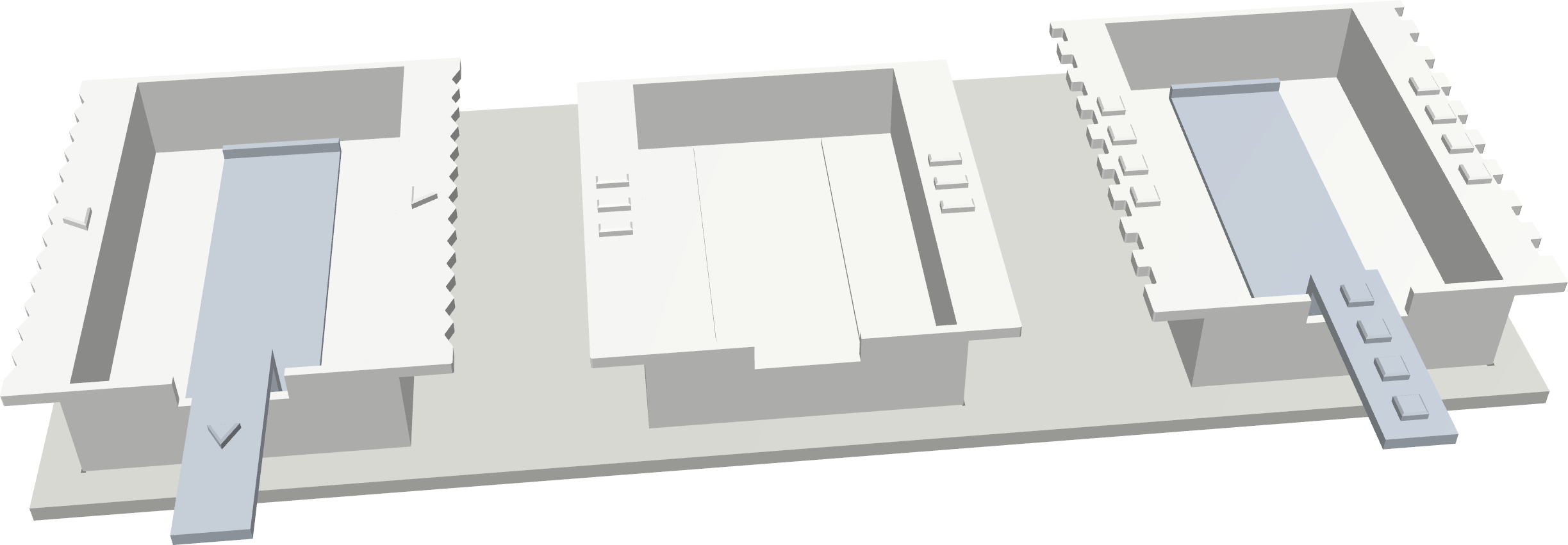
Drawing on the first author’s own practice as a wet-plate photographer working in such a safelight-free darkroom, we identified three design variables for darkroom tools: the plate size, the work surface, and the liquid volume of each step. We propose a parametric design tool that takes these inputs and computes (1) tactile codes that identify each liquid and its step order in a single touch, even through nitrile gloves, (2) the fewest trays that serve all plate sizes within a limit on wasted chemicals, and (3) a layout of the trays on a base plate that fits the work surface. We 3D-printed the resulting tool set and deployed it in the first author’s darkroom. The work explores how computational fabrication can make handwork in environments without sight safer by tailoring tools to the place and the body that use them.
[Authors] Chinatsu Ozawa, Yoichi Ochiai
<概要> 写真の暗室作業は本来、赤いセーフライトの弱い光の下で行います。しかし自宅の一室などではセーフライトを設置できず、薬品を扱う工程を完全な暗闇で行うことになります。とくに湿板写真(コロジオン湿板)では、硝酸銀水溶液・現像液・定着液といった見た目の似た液体を手探りで扱うため、容器の取り違えやこぼれは危険であり、高価な薬品の損失にもつながります。
本研究では、湿板写真家でもある第一著者自身の暗室での実践を分析し、道具の設計に必要な 3 つの変数――ガラス板のサイズ、作業面の大きさ、各工程の液量――を抽出しました。これらを入力すると、(1)液体の種類と工程の順番をニトリル手袋越しでも一触りで判別できる触覚コード、(2)無駄な薬液を抑えながら複数の板サイズに対応する最少のバット構成、(3)作業面上の配置とベースプレートを自動で導出するパラメトリック設計ツールを提案します。生成した道具一式を 3D プリンタで製作し、実際の自宅暗室に配置しました。計算で道具を「使う場所と身体に合わせて作る」ことで、見えない環境での手仕事をより安全にする試みです。
[著者] 小澤 知夏(公開時 修士2年),落合 陽一(図書館情報メディア系 教授)